A Witney childhood
Patrick Christopher Steptoe was born in Witney, Oxfordshire, on 9 June 1913, one of ten children. His father registered the town's births, marriages and deaths. His mother led the local Mothers' Union and was known for her care of poorer neighbours. His son Andrew believed that sense of service never left him.
He went to Witney Grammar School, then to King's College London and St George's Hospital Medical School. He qualified as a doctor in 1939, the year the war began.
Shipwreck and captivity
Steptoe joined the Royal Naval Volunteer Reserve as a surgeon. In May 1941 his ship, HMS Hereward, was sunk during the Battle of Crete. He survived, and spent the next two years in an Italian prisoner of war camp.
In 1943 he married Sheena Kennedy, who had trained as an actress at RADA. They had a son and a daughter.
Oldham and the keyhole
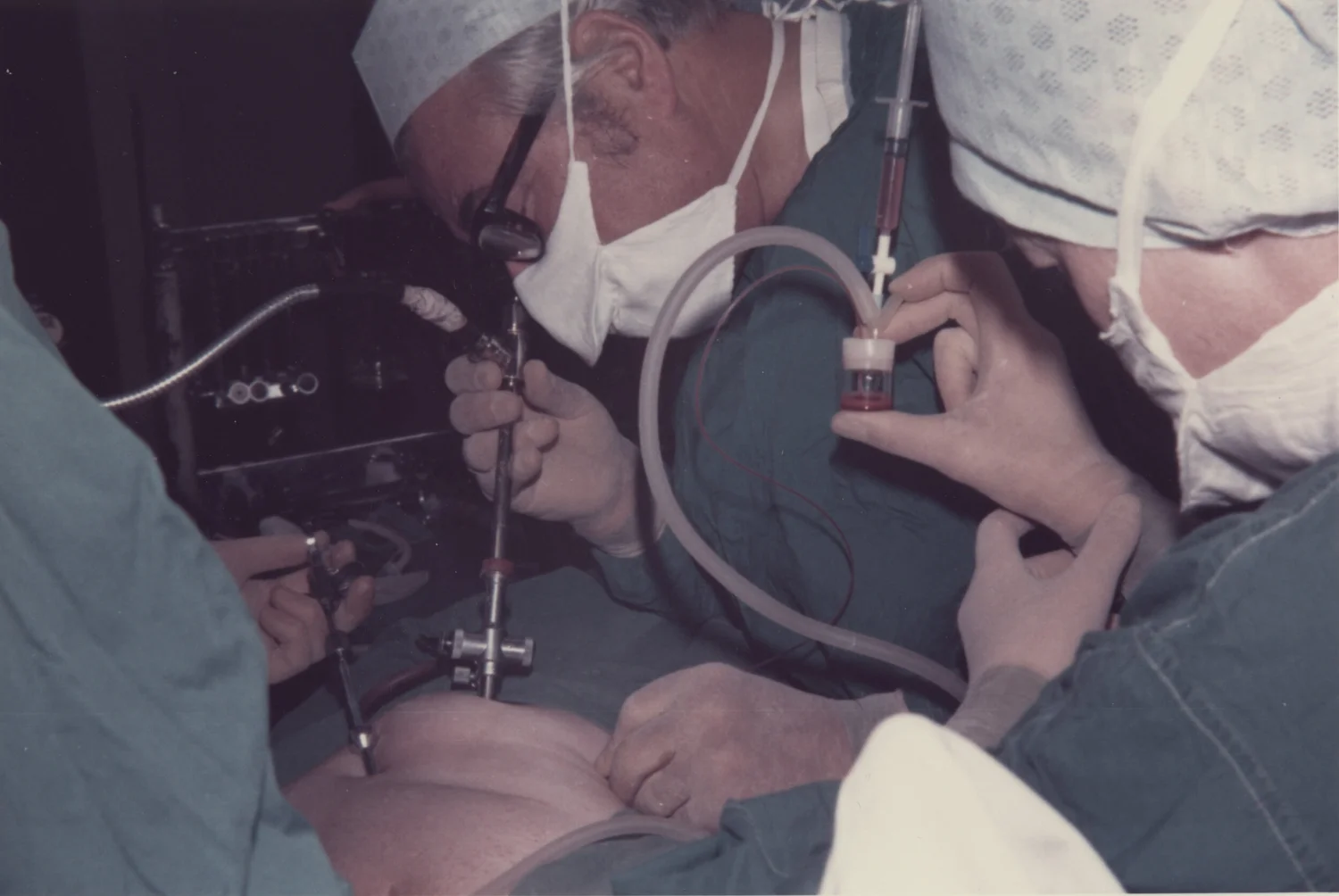
After the war he trained in obstetrics and gynaecology in London. In 1951 he moved north to the Oldham hospitals in Lancashire, and stayed until 1978.
In Oldham he made the laparoscope his own. This slender telescope let a surgeon see the pelvis through a tiny cut, without opening the abdomen. Steptoe was the first in Britain to make it accurate and safe. He wanted gentler ways to investigate infertility, and safer sterilisation for women. In 1967 he published Laparoscopy in Gynaecology, the first book on the subject in English.
Cambridge comes calling
In Cambridge, Robert Edwards read about Steptoe's work and was intrigued. Edwards had spent years ripening eggs taken from pieces of ovary. Steptoe's laparoscope offered something new: mature eggs, collected at exactly the right moment from a living patient who had chosen to take part. They began working together in 1968.
The partnership was unlikely and perfect. The Cambridge scientist and the northern surgeon lived and worked a long way apart. Jean Purdy ran the laboratory and travelled with Edwards between the two. The work was fitted around their day jobs.
The Oldham years
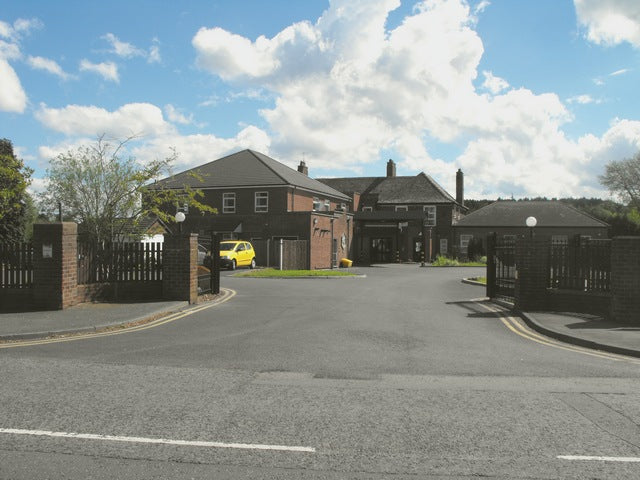
From 1969 to 1978 the team worked at Oldham and District General Hospital and at Dr Kershaw's Cottage Hospital in nearby Royton. Twenty-one notebooks survive from those years, recording the attempts from 9 January 1969 to 1 August 1978. Most ended in disappointment for the women who volunteered. They kept coming, and the team kept going.
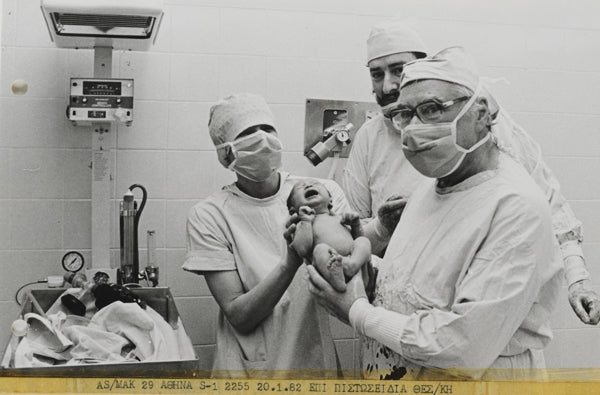
On 25 July 1978 Louise Brown was born by caesarean section at Oldham and District General Hospital. She weighed 2,700 grams and was perfectly healthy. A few weeks later he and Edwards told the world in a letter to The Lancet.
“We wish to report that one of our patients, a 30-year-old nulliparous married woman, was safely delivered by caesarean section on July 25, 1978, of a normal healthy infant girl weighing 2700 g.”Steptoe and Edwards, The Lancet, 12 August 1978
When they presented their results to the Royal College of Obstetricians and Gynaecologists later that year, the audience rose to its feet. It was the first standing ovation in the College's history.
Bourn Hall
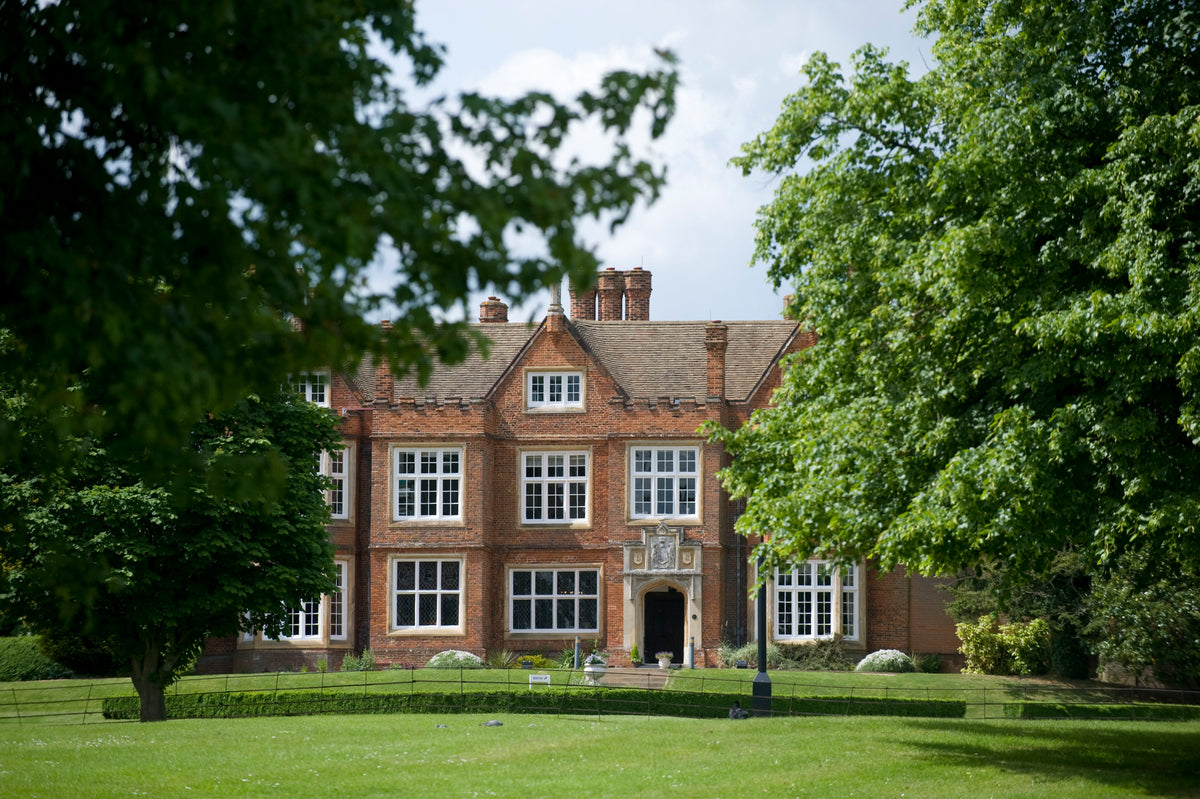
No university or public body offered to fund the next step. So Steptoe and Edwards, with Jean Purdy, opened their own clinic at Bourn Hall, near Cambridge, in 1980. It was the first IVF clinic in the world, and Steptoe was its medical director for the rest of his life. Doctors came from around the world to learn from him.
Peter Brinsden, who trained there, remembered a man “almost obsessive about the importance of doing one's very best for each and every patient”.
Recognition followed. In 1987 he became the first gynaecologist elected a Fellow of the Royal Society. He was appointed CBE in the 1988 New Year Honours. He had already helped to found the British Fertility Society and served as its first chairman.
Patrick Steptoe died on 22 March 1988, aged 74.
Remembered
“Great charm carried him through many difficult situations, inspired enormous devotion in his staff and patients.”Robert Edwards, Royal Society tribute, 1989
His son Andrew called him “first and foremost a doctor intensely concerned about the health of women”. Louise Brown put it more simply: “Patrick Steptoe was like a grandfather to me.”
In 2019 Andrew Steptoe unveiled a blue plaque on the family home at 52 West End, Witney. His father's papers are kept at the Churchill Archives Centre in Cambridge.
Sources for this page
- Edwards RG. Patrick Christopher Steptoe, C. B. E. Biogr Mems Fell R Soc 1996;42:433 to 452.
- Churchill Archives Centre. The Papers of Patrick Steptoe (STPT), biographical note. archivesearch.lib.cam.ac.uk
- Oxfordshire Blue Plaques Board. Patrick Steptoe FRS. oxonblueplaques.org.uk
- Witney District Museum. People of Witney: Patrick Steptoe. witneymuseum.org.uk
- Encyclopaedia Britannica. Patrick Steptoe. britannica.com
- Elder K, Johnson MH. The Oldham Notebooks. I. Introduction, materials and methods. Reprod Biomed Soc Online 2015. PMC5341285
- Steptoe PC, Edwards RG. Birth after the reimplantation of a human embryo. The Lancet 1978;2(8085):366.
- Steptoe PC. Laparoscopy in Gynaecology. Edinburgh: Livingstone; 1967.
- Bourn Hall Clinic. Home of Patrick Steptoe, 'Father of IVF', honoured with blue plaque. bournhall.co.uk
- Note: some sources give his death as 21 March 1988. This page follows the Royal Society memoir, 22 March.

