A Yorkshire boyhood
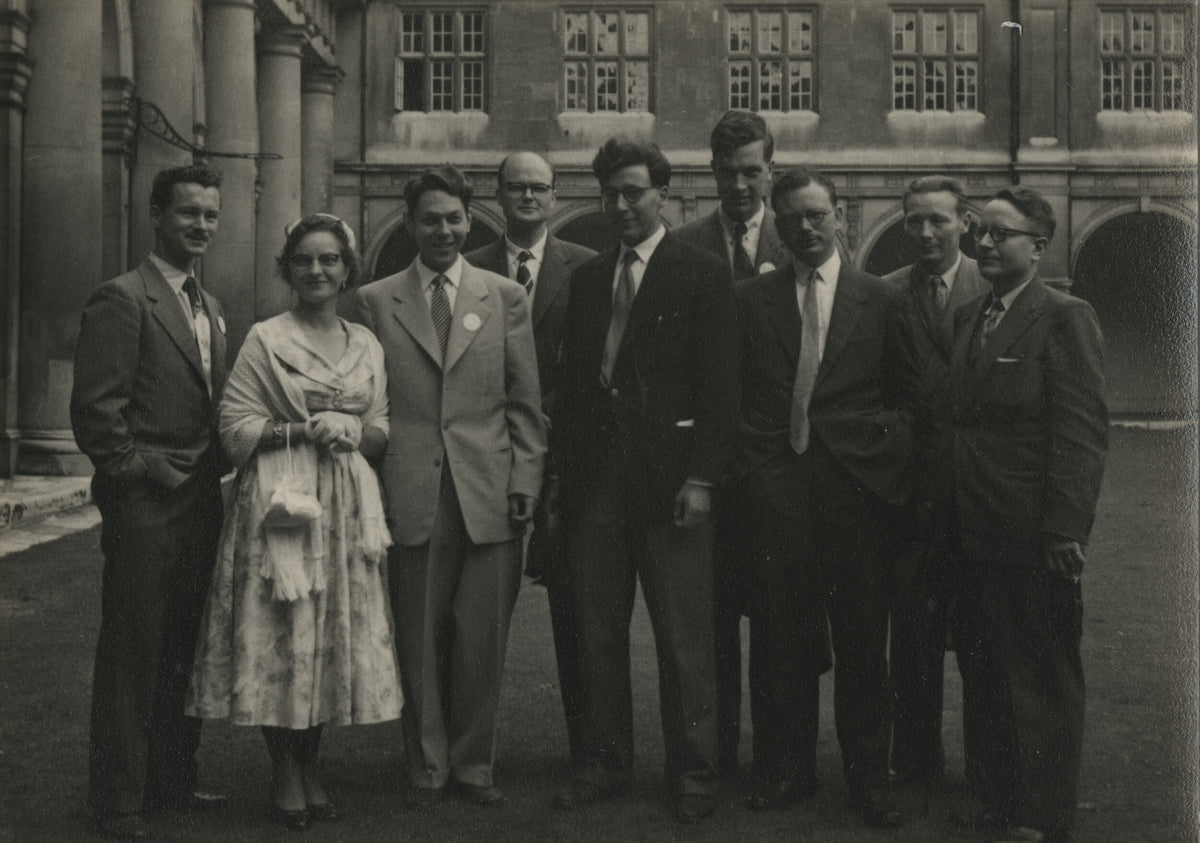
Robert Geoffrey Edwards was born in Batley, Yorkshire, on 27 September 1925. To friends he would always be Bob. His father worked on the Settle to Carlisle railway. His mother was a machinist in a mill. When the family moved to her home city of Manchester, all three Edwards boys won scholarships to Manchester Central High School.
Decades later, accepting one of medicine's highest honours, he thought first of his teachers.
“As I grow older, I remember with increasing affection and admiration how my teachers in school led me gently into science.”Lasker Award acceptance, 2001
War, and a false start
In 1943 he was called up. He served mostly in Palestine and was not demobbed until 1948. He went to Bangor, in North Wales, to study agriculture, found it lacked the science he craved, and switched to zoology. In 1951 he graduated with only a pass degree. He was devastated.
He would spend the rest of his life proving the examiners wrong.
Edinburgh, mice and Ruth
Conrad Waddington, the great Edinburgh geneticist, saw the young man's passion and took him on. Under Alan Beatty, Edwards studied mouse embryos and finished his PhD in 1955.
Mice ovulate in the middle of the night, and Edwards grew tired of midnight trips to the animal house. With a fellow student, Ruth Fowler, he found a way to use hormones to make mice ovulate to a timetable of their choosing. Their 1957 paper on superovulation would echo through everything that followed. Ruth, a granddaughter of Ernest Rutherford, became his wife and his lifelong scientific partner. They had five daughters.
The question
In 1958 Edwards joined the National Institute for Medical Research at Mill Hill, in London. There a question took hold of him and never let go. Could a human egg be matured, and fertilised, outside the body? The Institute would not support experiments on fertilising human eggs. After a spell in Glasgow he moved to Cambridge in 1963, and stayed for the rest of his life.
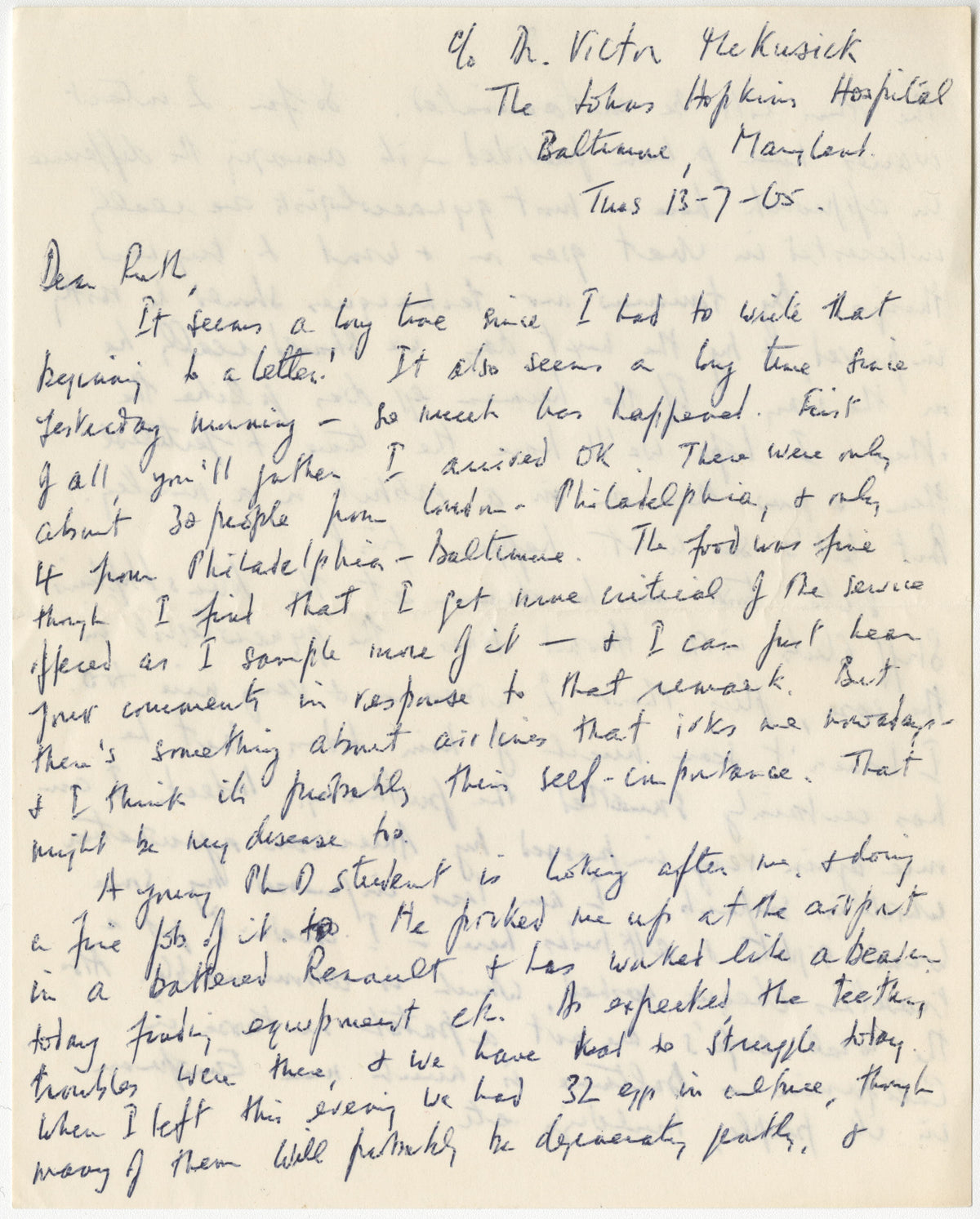
In Cambridge he worked out how human eggs ripen, how long it takes, and when an egg is ready to meet a sperm. His 1965 paper in The Lancet set the course of IVF research for decades. Human eggs were scarce in Britain, so that summer he crossed the Atlantic to Johns Hopkins in Baltimore for six weeks. There he met Howard and Georgeanna Jones, who would one day bring IVF to the United States. The friendship lasted the rest of their lives.
Oldham
In the mid-1960s Edwards read about a gynaecologist in Oldham who could look inside the body through a slender telescope, the laparoscope. His name was Patrick Steptoe. They began working together in 1968. That same year a young Cambridge nurse, Jean Purdy, joined Edwards as his assistant.
For the next ten years Edwards and Purdy travelled back and forth across England, from Cambridge to Oldham and home again. Much of the work was done in their spare time. In February 1969 Edwards, with Barry Bavister and Steptoe, reported in Nature that human eggs matured in the laboratory had been fertilised there.
The Medical Research Council would not fund the clinical work. A private donation kept it alive. Religious leaders, newspapers and many fellow scientists attacked them. Edwards answered by opening the ethical debate himself, and joining every round of it.
Embryo transfers began in 1972. Year after year, hopes rose and fell. Then, in 1977, Lesley and John Brown came to the team after nine years of trying for a child.
25 July 1978
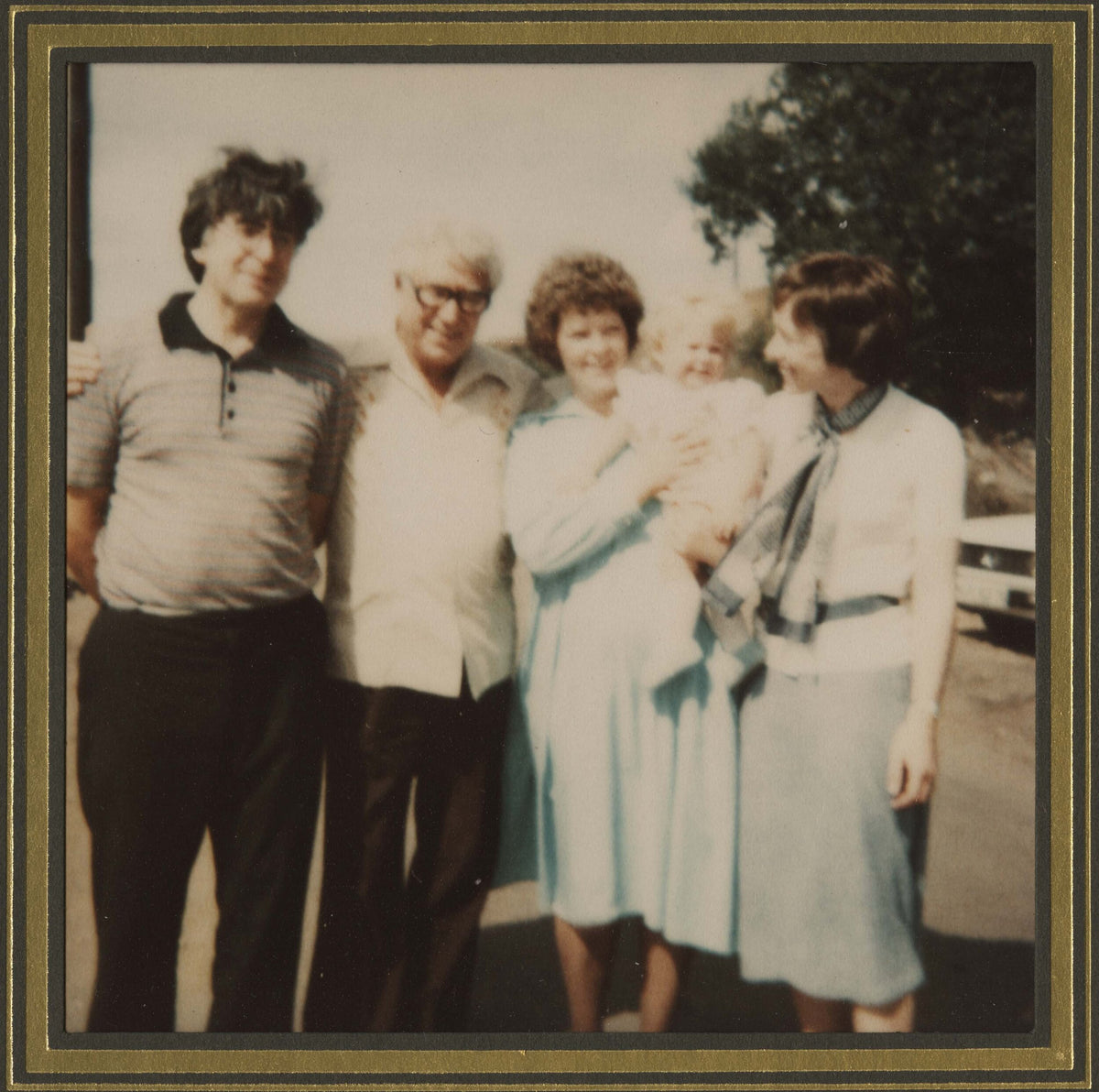
Their daughter Louise was born on 25 July 1978, the first person in the world conceived by in-vitro fertilisation. Edwards kept in touch with her all his life. Years later, he was a guest at her wedding.
Bourn Hall, and a new science
No public funding was on offer for what came next. So in 1980 Edwards, Steptoe and Purdy opened their own clinic at Bourn Hall, near Cambridge, the first IVF clinic in the world. By 1986 a thousand babies had been born there, about half of all the IVF births anywhere.
Edwards then built the institutions of a new field. He was a founder of the European Society of Human Reproduction and Embryology and its first chairman. He launched its journal, Human Reproduction, in 1986 and edited it for fifteen years. In 2000 he founded Reproductive BioMedicine Online. He wrote to his critics and argued it out with them, and in 1985 he welcomed Enoch Powell to Bourn Hall.
He never forgot who had stood beside him. When Jean Purdy's name was left off the Oldham plaque, he fought for it, and kept on fighting.
Stockholm
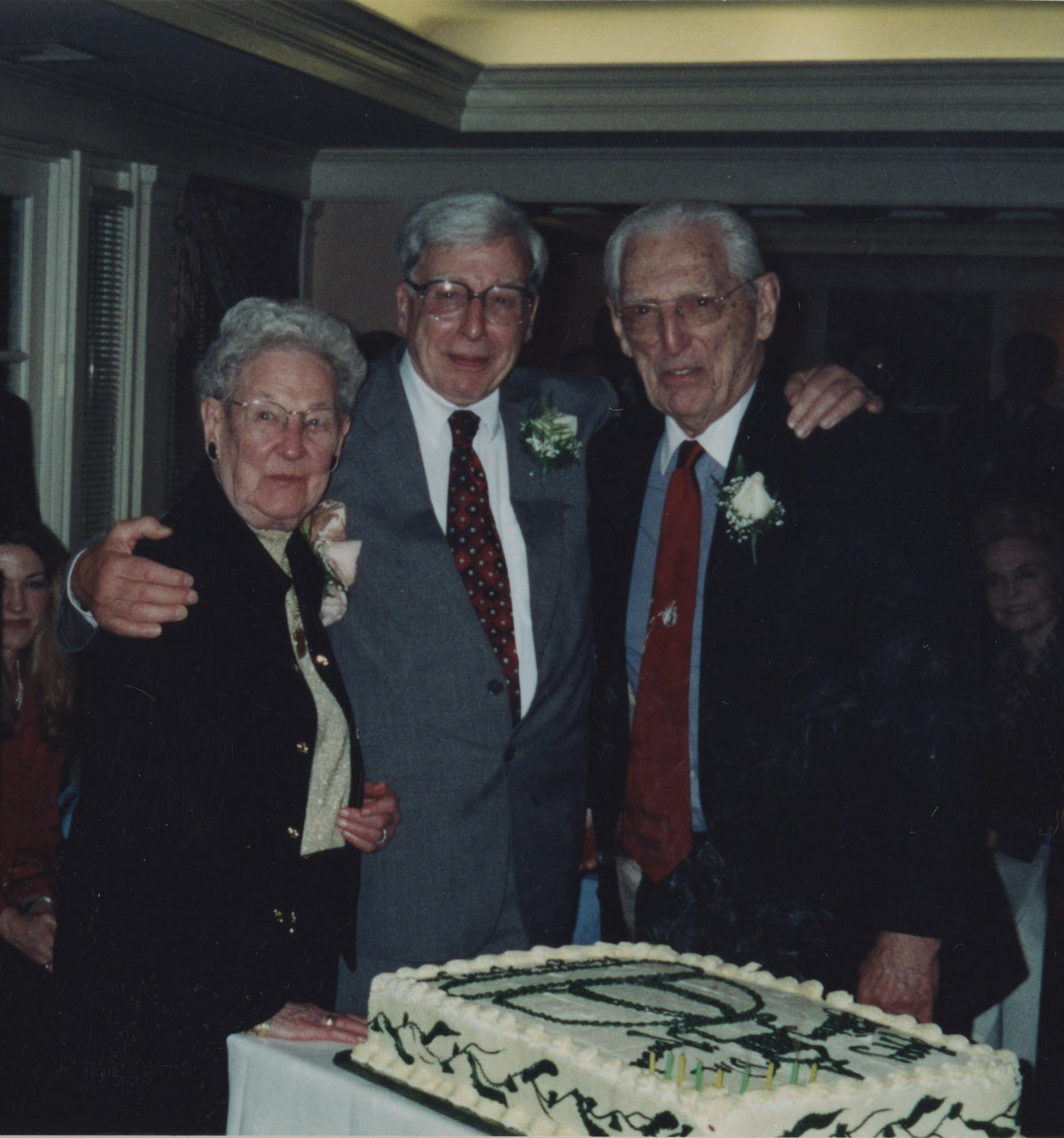
Honours came late, then all at once. He was elected a Fellow of the Royal Society in 1984 and appointed CBE in 1988. In 2001 he received the Lasker Award. In 2010 he was awarded the Nobel Prize in Physiology or Medicine, alone, “for the development of in vitro fertilization”. He was too ill to travel to Stockholm, and sad that Patrick Steptoe, who had died in 1988, could not share it. He was knighted in 2011.
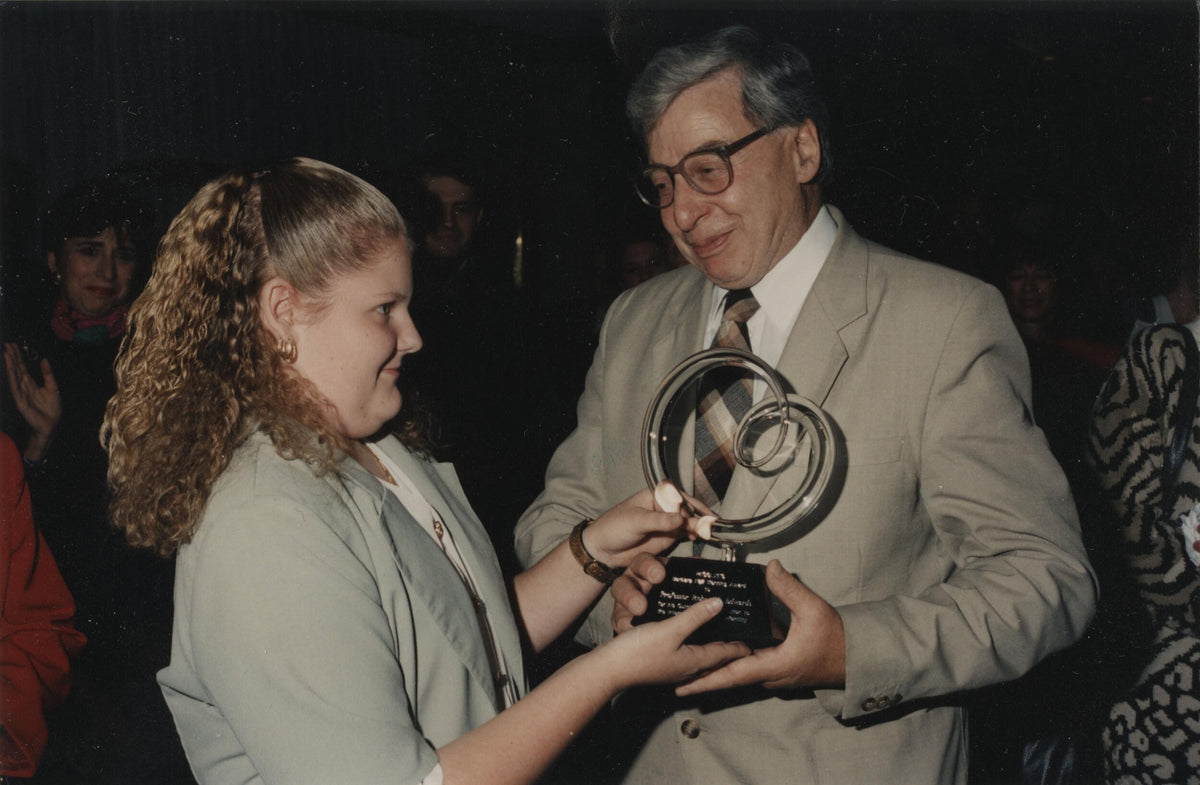
“Patrick’s superb laparoscopy enabled mature human oocytes to be aspirated, fertilised, and grown to blastocysts in vitro.”Edwards on Steptoe, Lasker Award acceptance, 2001
Sir Robert Edwards died on 10 April 2013, aged 87, survived by Ruth, five daughters and twelve grandchildren. Martin Johnson, writing his obituary, remembered him as modest, affable, argumentative and generous.
What he left us
By the time of his Nobel Prize, more than four and a half million people had been born through IVF. The number has since passed ten million. Every one of them owes something to a boy from Batley who would not let a question go.
His papers are kept at the Churchill Archives Centre in Cambridge: letters, notebooks, photographs, and the long correspondence of his campaign for Jean Purdy.
Sources for this page
- Nobel Prize Outreach. Robert G. Edwards: facts, and press release, 4 October 2010. nobelprize.org
- Johnson MH. Sir Robert Edwards obituary. The Guardian, 10 April 2013. theguardian.com
- Johnson MH. Professor Sir Robert Edwards (1925 to 2013). University of Cambridge. reproduction.group.cam.ac.uk
- Churchill Archives Centre. The Archive of Robert Edwards (IVF pioneer). chuarchivestories.uk
- Lasker Foundation. 2001 Clinical Medical Research Award: in vitro fertilization, citation and acceptance remarks. laskerfoundation.org
- ESHRE. The First 21 Years, and press release on the 2010 Nobel Prize. eshre.eu
- Edwards RG, Bavister BD, Steptoe PC. Early stages of fertilization in vitro of human oocytes matured in vitro. Nature 1969;221:632 to 635.
- Johnson MH. IVF: the women who helped make it happen. Reprod Biomed Soc Online 2019. PMC6352853
- Gardner R. Sir Robert Geoffrey Edwards CBE. Biogr Mems Fell R Soc 2015;61:81 to 102.
- ESHRE. 10 million babies born through ART since 1978 (ART fact sheet). Figure used on the museum's front page.

