Collection
The IVF Museum · Collection
Collection
The things themselves: the equipment and objects with which the work was actually done.
CO·01 · 1977
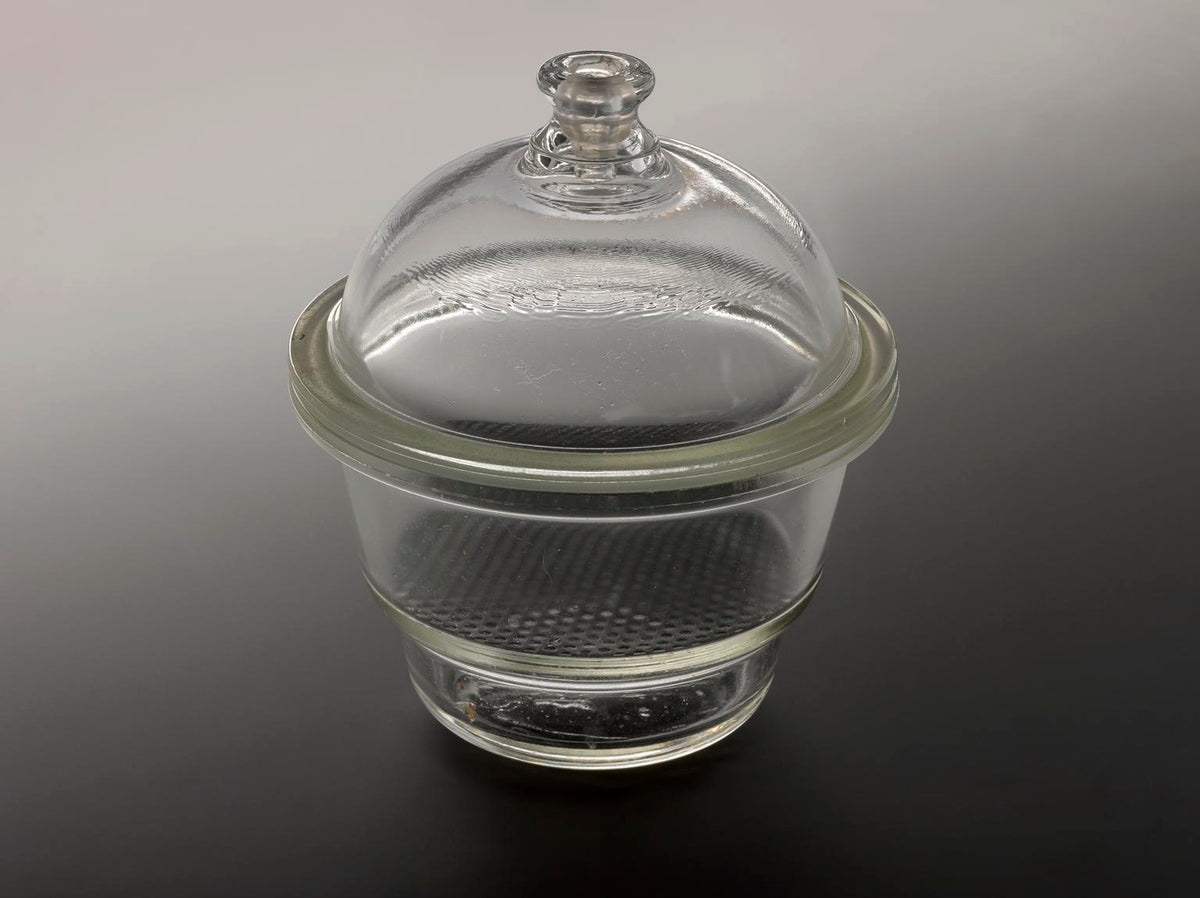
The desiccator
It looks like an ordinary piece of laboratory glass. But in the 1970s, before purpose-built IVF incubators existed, the first human embryos began their lives in vessels like this one.
Culture dishes were sealed inside the desiccator with the right mixture of gases, and the whole vessel was placed inside a warm incubator. Inside it, eggs were fertilised and embryos divided, in conditions kept as steady and as close to the body as the scientists could make them.
This desiccator dates from 1977, the year before Louise Brown was born. It is now in the care of the Science Museum Group in London.
- Object
- Desiccator, placed inside an incubator
- Date
- 1977
- Held by
- Science Museum Group, object 2022-20
- See also
- 1980: How it was done, the paper that set out the method
The Collection is just beginning. More objects will be added as they are photographed and their stories confirmed.

