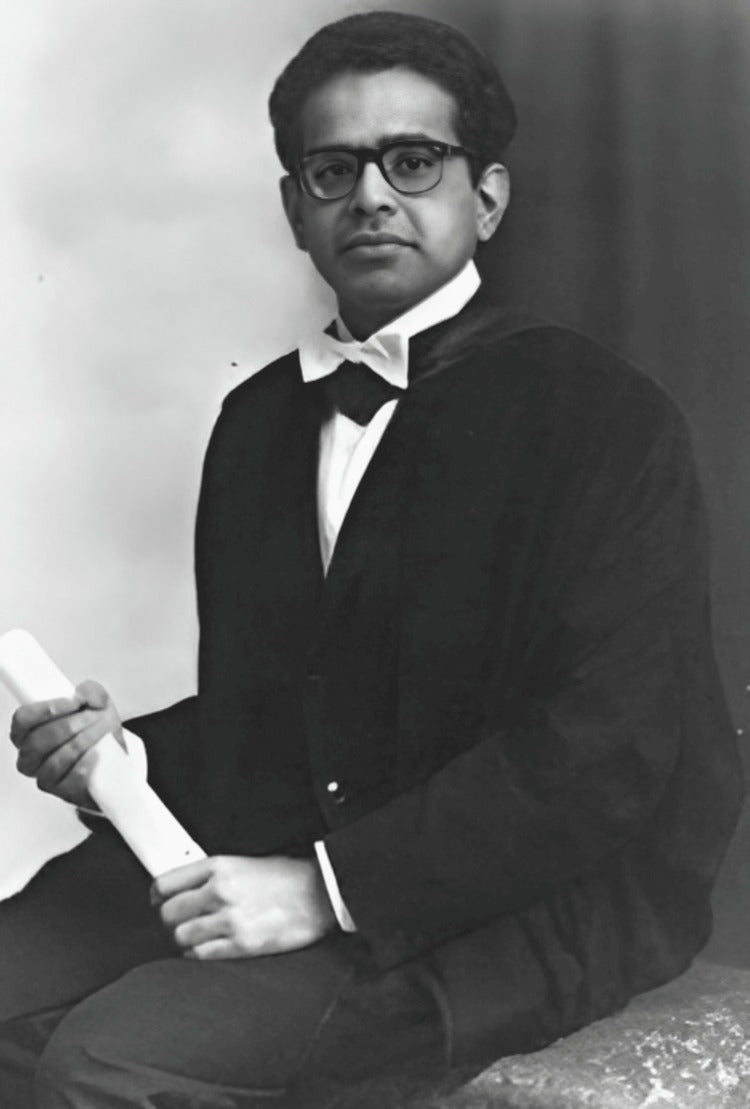
A doctor's son
Subhas Mukherjee was born in Hazaribagh on 16 January 1931. His father, Satyendra Nath Mukherjee, was a well-known radiologist. Subhas grew up in Calcutta and learnt Bengali from the novelist Bibhutibhushan Bandyopadhyay.
He read physiology at Presidency College, then qualified in medicine, coming first in obstetrics and gynaecology. His first doctorate, in 1958, studied the chemistry of pregnancy. In 1960 he married Namita, a history teacher, who would later help to keep his memory alive.
Edinburgh
A Colombo Plan scholarship took him to the Medical Research Council's Clinical Endocrinology Research Unit in Edinburgh. There, under John Loraine, he spent years perfecting ways to measure reproductive hormones, painstaking work in the days before modern assays. His Edinburgh thesis of 1963 survives, and can still be read.
He came home to Calcutta in 1967 and joined NRS Medical College, rising from lecturer to professor of physiology. He lived on the campus and built a small animal house downstairs. His curiosity ranged widely, from hormones in the lining of the womb to the effects of stress on the ovary.
Durga
Bela Agarwal had longed for a child for years, but her fallopian tubes were damaged. Mukherjee offered her and her husband an experimental treatment, with no promises.
In November 1977 she was given hormones to ripen several eggs at once. Five eggs were collected through a small incision and fertilised with her husband's sperm. The embryos grew to eight cells or more.
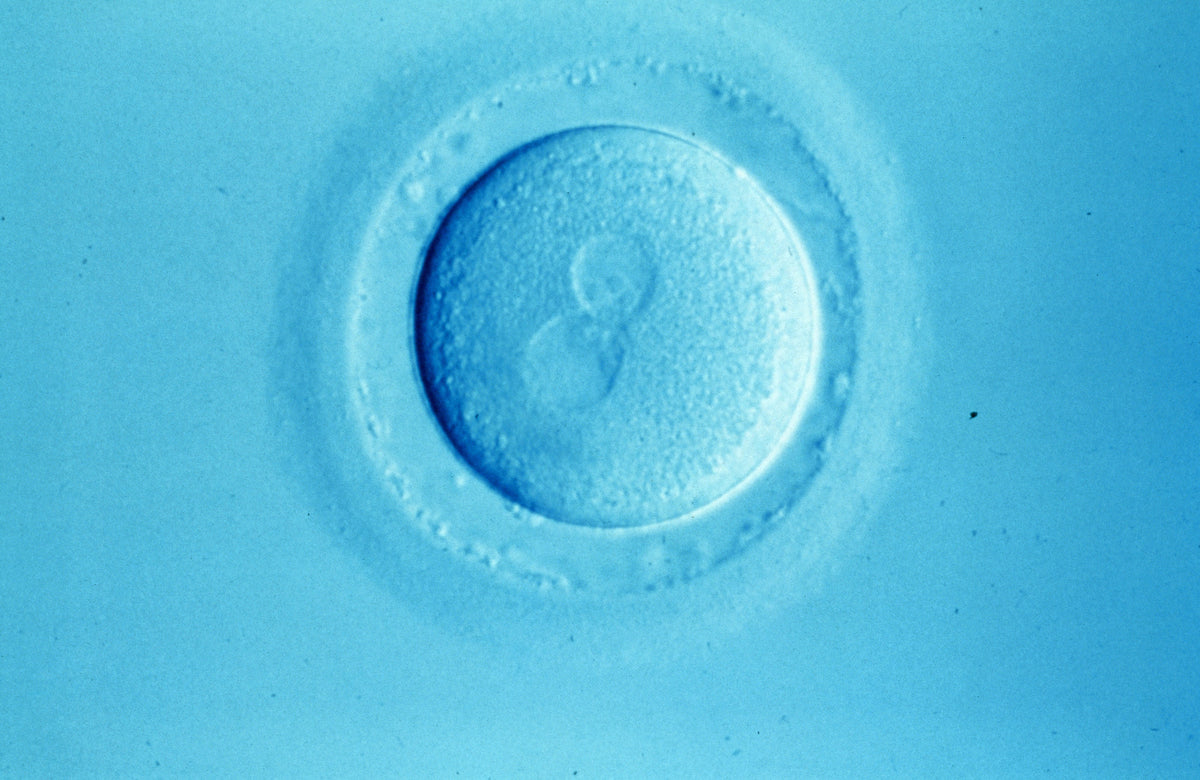
Then Mukherjee did something remarkable. With Sunit Mukherjee, a cryobiologist, he froze the embryos slowly in an alcohol bath with dry ice, protected by a chemical called dimethyl sulphoxide. They stayed in liquid nitrogen for about 53 days. He reasoned that the hormones had disturbed Bela's cycle, and that a later, natural cycle would give the embryos a better chance. The thawed embryos were transferred in January 1978.
On 3 October 1978 a healthy girl was born by caesarean section in Calcutta. That same day Calcutta's television station announced the birth of India's first test tube baby. Her family's name was kept private. She was called Durga, after the goddess, because she arrived during the Durga Puja festival.
Disbelief
At the West Bengal government's request, the team submitted a signed report on 19 October 1978. An expert committee was formed to judge it. It was led by a radiophysicist, and none of its members was a specialist in reproductive medicine. In November 1978 it declared the claim bogus.
Mukherjee had held back some details, meaning to publish once he had repeated the result. A short note on embryo freezing appeared in the Indian Journal of Cryogenics. A full account never followed.
“I had to be careful to guard our unpublished data, because by that time I became aware of the penetrating efficiency of the tentacles of the mass media.”Letter to the Director of Health Services, West Bengal, 1 December 1978
He was forbidden to attend conferences without permission. When Kyoto University invited him to Japan in 1979, permission was refused. He suffered a heart attack. In 1981 he was transferred to an eye hospital as professor of electrophysiology, far from his own field. On 19 June 1981 he took his own life. He was 50.
Vindication
Namita Mukherjee and Sunit Mukherjee kept his papers safe. In 1990 the director Tapan Sinha made Ek Doctor Ki Maut, a film loosely based on his story.
Then, in 1997, T. C. Anand Kumar, whose own team had produced India's first scientifically documented IVF baby in 1986, went through Mukherjee's notes and letters and met Durga's family. His verdict was clear.
“I have no doubt that Mukerji did produce a test tube baby.”T. C. Anand Kumar, Current Science, 1997
In 2002 the Indian Council of Medical Research recognised his work. In 2003 Kanupriya Agarwal, Durga herself, spoke at a Bangalore seminar marking twenty-five years of IVF. A plaque was unveiled at NRS Medical College in 2006, the Council created an award in his name in 2012, and a statue was unveiled in Hazaribagh in 2018.
With a small team and few resources, he reached the same goal as Oldham within weeks. If he was right, he was also the first to bring a frozen human embryo to birth. The next pregnancy from a frozen embryo was not reported until 1983, by Trounson and Mohr. That claim rests on brief documents, and this museum marks it as contested. This museum honours his courage and his achievement, and records the doubt.
Sources for this page
- Anand Kumar TC. Architect of India's first test tube baby: Dr Subhas Mukerji. Current Science 1997;72(7):526 to 531. currentscience.ac.in
- Mukherjee S, Mehta RH. Dr Subhas Mukherjee: a visionary and pioneer of IVF. ICMR-NIRRCH, 2020. nirrch.res.in
- Mukhopadhyay S. Some observations on the biological assay of gonadotrophic hormones. PhD thesis, University of Edinburgh, 1963. hdl.handle.net/1842/19171
- Cherukuri AMK, et al. Dr Subhas Mukhopadhyay (1931 to 1981): a pioneer in reproductive medicine. Cureus 2024;16(9):e68608. PMC11452318
- Khastgir G, Khastgir G. A missed Nobel: Dr Subhas Mukhopadhyay. J Med Biogr 2025;33(2):105 to 108.
- Note: the inquiry committee met on 17 or 18 November 1978; the sources differ. Anand Kumar's 1997 title gives his death as 19 July 1981 and Cherukuri and colleagues (2024) give 18 June; this museum follows 19 June, for the reasons set out on the Pioneers page.

